
Weekly Digest - July 20, 2026
Scott Keck-Warren • July 20, 2026
Three this week: a small fix for a big code review headache, an intro to loop engineering, and the real reason most podcasts fade out.
Stop Guessing What Your Code Review Comments Mean
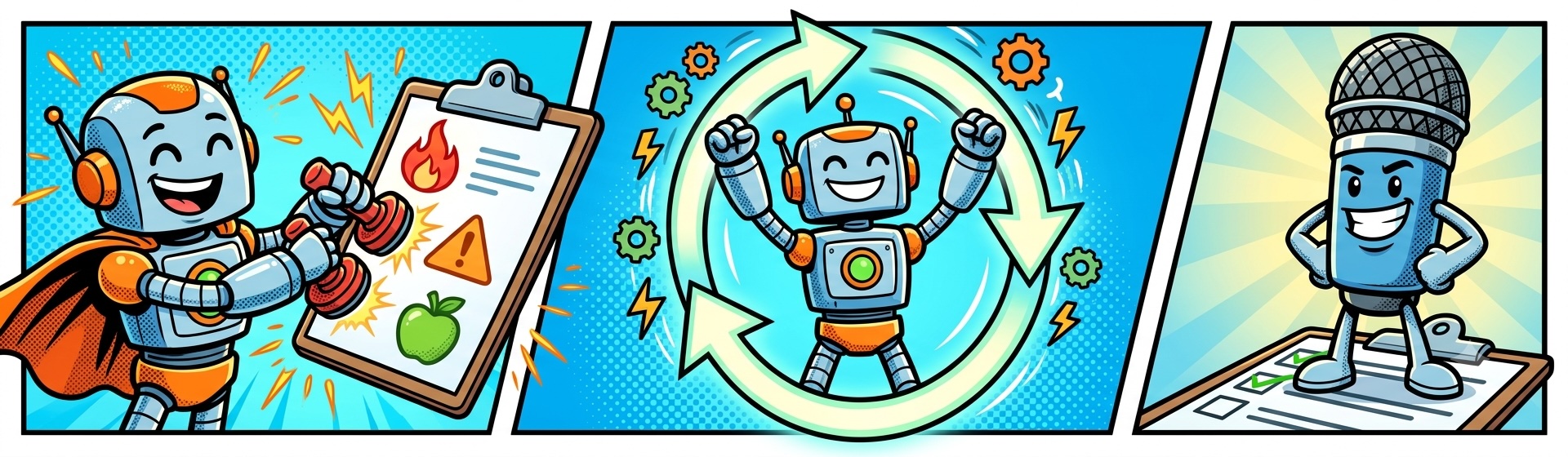
A three-emoji system for tagging review comments: 🔥 for blockers that must be fixed before approval, ⚠️ for warnings that need discussion, and 🍏 for optional improvements nobody's tracking. Thirty seconds of extra effort per comment kills the low-grade anxiety authors feel wondering which notes actually require changes, and reviewers save time by front-loading the answer instead of managing a comment thread later.
Introduction to Loop Engineering: Building AI Agents That Run Themselves
Loop engineering takes the repetitive prompting you'd normally do by hand and turns it into code: the agent acts, observes, reasons, and iterates on its own instead of waiting for you to steer each step. The piece traces the idea back to Geoffrey Huntley's "Ralph Wiggum method," breaks down the five building blocks (automations, git worktrees, skills, plugins, sub-agents), and sorts loops into fast, medium, and slow depending on how long they run. The warning that matters most: set iteration limits up front, because API costs and context drift both compound fast in loops with no clear stopping point.
Podfade: Why Podcasts Quit and How to Prevent It
Most podcasts don't die from lack of passion, they die around episode seven when editing turns into a chore and momentum hasn't caught up yet. The fix isn't more willpower, it's a workflow: templates for recurring tasks, a fixed recording day, a one-episode buffer, and tracking output instead of obsessing over early download numbers. If a show's already faded, the answer is a specific relaunch date and a short, low-pressure episode to break the silence.
See you next Monday.